


Commercial Restoration Explained: Complete Restoration Guide
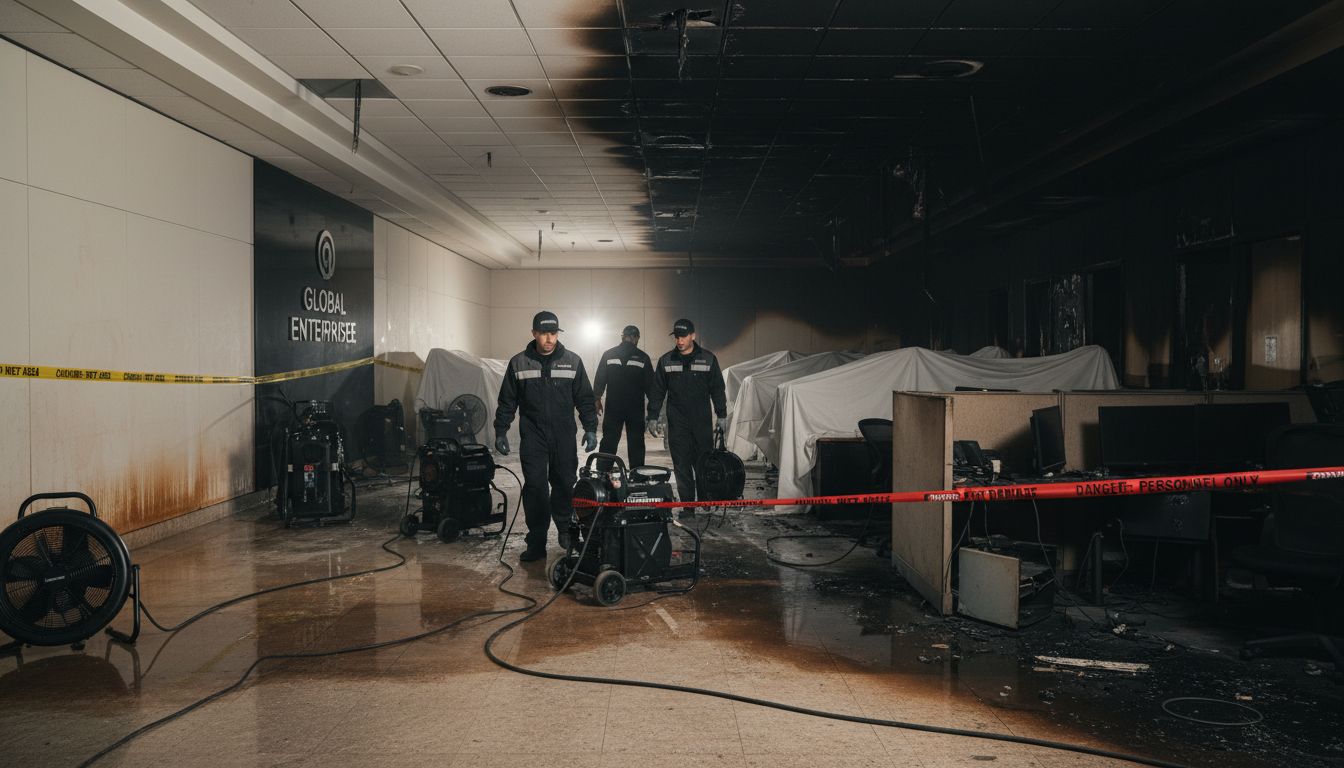
Every year, more than twenty percent of american businesses experience significant property damage from disasters like water leaks or fires. The stakes are high because even a short interruption can cost thousands in lost revenue and impact countless jobs. Choosing the right commercial restoration service is not just about fixing what is broken, it is about protecting your business, your team, and your long-term success by using proven strategies that speed up recovery and minimize disruption.
Table of Contents
- Defining Commercial Restoration Services
- Major Types of Commercial Restoration
- Step-By-Step Commercial Restoration Process
- Industry Standards and Regulatory Compliance
- Costs, Risks, and Insurance Considerations
Key Takeaways
| Point | Details |
|---|---|
| Specialized Restoration Services | Commercial restoration focuses on returning damaged business properties to pre-loss condition after disasters like water or fire incidents. |
| Types of Damage Restoration | Key types include water damage restoration, fire damage cleanup, and mold remediation, each requiring specific expertise and techniques. |
| Structured Restoration Process | The restoration process involves initial assessment, emergency mitigation, detailed planning, and execution to minimize disruption and ensure swift recovery. |
| Cost and Insurance Considerations | Effective commercial restoration requires understanding direct and indirect costs, alongside strategic insurance coverage to alleviate financial risks. |
Defining Commercial Restoration Services
Commercial restoration is a specialized professional service designed to repair and recover damaged business properties after unexpected disasters. According to restorationindustry.org, the restoration industry focuses on returning damaged structures to their original pre-loss condition following events like water damage, fire incidents, mold growth, or storm impacts.
These comprehensive services encompass multiple critical processes tailored for commercial environments. Key restoration activities typically include:
- Water extraction and comprehensive drying techniques
- Soot and smoke damage removal
- Structural damage assessment and repair
- Mold remediation and prevention
- Advanced cleaning and sanitization protocols
As highlighted by fmj.ifma.org, commercial restoration professionals utilize sophisticated techniques like desiccant drying to efficiently restore properties. These methods are strategically designed to minimize business disruption and control recovery costs, ensuring that organizations can return to normal operations as quickly as possible.
Professional commercial restoration goes beyond simple cleanup. Trained technicians conduct detailed damage assessments, develop targeted recovery strategies, and implement advanced restoration technologies. Their goal is not just to repair physical damage but to help businesses rebuild and resume their operations with minimal long-term impact.
Major Types of Commercial Restoration
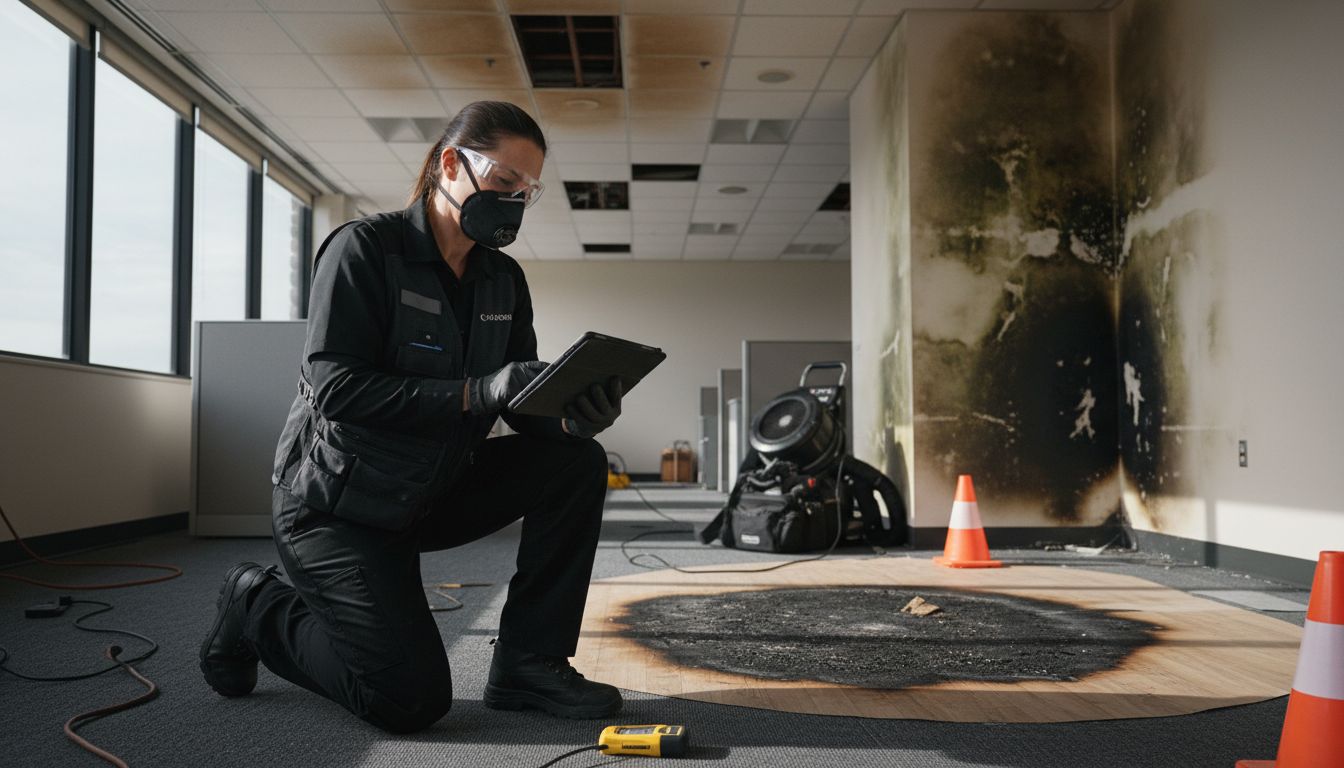
Commercial restoration encompasses several specialized approaches to address different types of property damage. According to restorationindustry.org, the primary types of commercial restoration include water damage restoration, fire damage cleanup, soot removal, mold remediation, and structural drying.
These restoration categories each require unique technical expertise and specialized equipment:
- Water Damage Restoration
- Emergency water extraction
- Moisture mapping
- Industrial-grade dehumidification
- Structural drying techniques
- Preventing secondary water damage
- Fire and Smoke Damage Restoration
- Soot and smoke residue removal
- Structural cleaning and sanitization
- Odor elimination
- Contents restoration
- Smoke damage assessment
- Mold Remediation
- Comprehensive mold inspection
- Containment procedures
- Advanced removal techniques
- Prevention strategies
- Air quality testing
As highlighted by scrt.org, these restoration types often involve complex projects across commercial, industrial, institutional, and large residential structures. Each type of restoration demands a strategic approach to address extensive damage from water intrusion, fire incidents, or severe storm impacts.
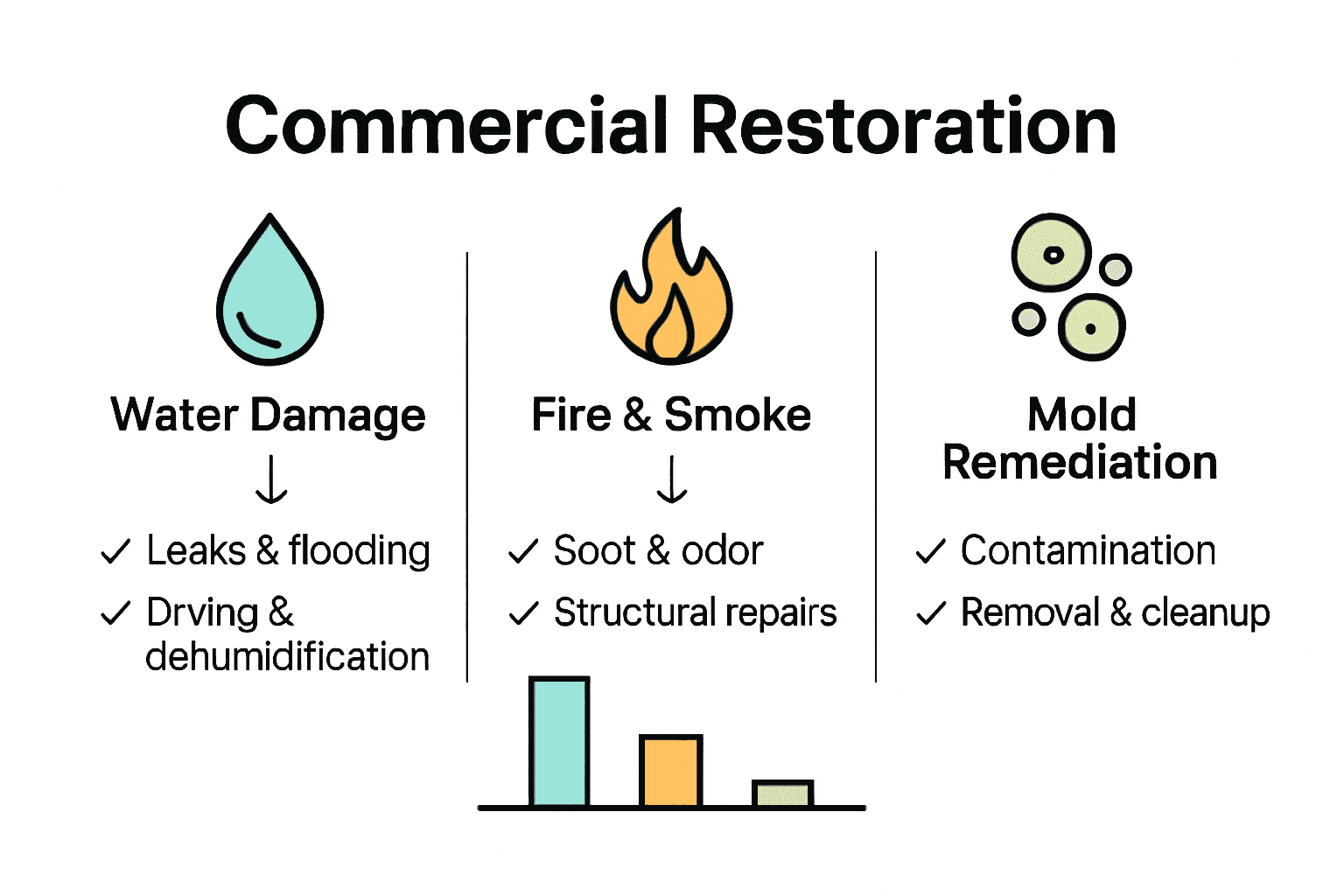
Professional restoration teams utilize sophisticated diagnostic tools and advanced technologies to assess, plan, and execute comprehensive recovery strategies. The goal is not just repair, but to restore properties to their pre-damage condition while minimizing potential long-term structural and economic consequences. Effective commercial damage restoration strategies require a precise, methodical approach tailored to each unique damage scenario.
Step-By-Step Commercial Restoration Process
Commercial restoration is a systematic process requiring precision and expertise. According to restorationindustry.org, the process involves immediate action, emergency mitigation, specialized handling of hazardous materials, and addressing critical structural concerns to return properties to their pre-loss condition.
The comprehensive restoration process typically follows these critical stages:
- Initial Assessment and Damage Evaluation
- Comprehensive property inspection
- Documenting extent of damage
- Identifying potential safety hazards
- Developing initial restoration strategy
- Emergency Mitigation
- Securing the property
- Preventing further damage
- Implementing immediate protective measures
- Stabilizing critical infrastructure
- Detailed Restoration Planning
- Precise damage mapping
- Equipment and resource allocation
- Developing restoration timeline
- Coordination with insurance providers
- Restoration and Reconstruction
- Specialized cleaning techniques
- Structural repairs
- Content restoration
- Environmental remediation
As highlighted by fmj.ifma.org, selecting appropriate restoration methods early in the process is crucial. In large-scale water loss scenarios, techniques like desiccant drying can significantly minimize business disruption and accelerate recovery.
Professional restoration requires a methodical approach that balances technical expertise with strategic planning. Tips to restore your business safely emphasize the importance of swift, professional intervention to protect both physical assets and business continuity. The goal is always to return the property to its original condition while minimizing economic and operational impact.
Industry Standards and Regulatory Compliance
Commercial restoration operates within a complex framework of industry standards and regulatory requirements designed to ensure safety, quality, and professional excellence. According to restorationindustry.org, restoration professionals must obtain specialized certifications such as the Water Damage Restoration Technician (WRT) and Fire and Smoke Damage Restoration Technician (FSRT) to maintain compliance with critical industry standards.
Key certification and standard requirements include:
- Professional Certification Standards
- IICRC (Institute of Inspection, Cleaning and Restoration Certification)
- Water Damage Restoration Technician (WRT)
- Fire and Smoke Damage Restoration Technician (FSRT)
- Mold Remediation Technician
- Applied Microbial Remediation Specialist
- Regulatory Compliance Areas
- Environmental protection regulations
- Hazardous material handling protocols
- Health and safety workplace standards
- Insurance and liability requirements
- Building code restoration guidelines
- Technical Performance Standards
- Equipment calibration and maintenance
- Documentation and reporting procedures
- Quality control measures
- Risk assessment protocols
- Client communication standards
As highlighted by scrt.org, the IICRC S500 Standard provides comprehensive guidelines for professional water damage restoration, particularly for large or catastrophic projects. These standards ensure that restoration professionals follow consistent, scientifically-backed methodologies to protect property and human health.
Ultimately, adherence to industry standards is not just about regulatory compliance. Tips to restore your business safely underscore that these certifications and standards represent a commitment to delivering the highest quality restoration services, protecting both client assets and professional reputation.
Costs, Risks, and Insurance Considerations
Commercial restoration involves complex financial and risk management strategies that require careful planning and strategic decision-making. The potential costs of property damage can escalate quickly, making proactive risk mitigation and comprehensive insurance coverage critical for businesses facing unexpected restoration challenges.
Key financial and risk considerations include:
- Direct Restoration Costs
- Emergency response expenses
- Equipment and material costs
- Labor and specialized technical services
- Temporary relocation expenses
- Structural repair investments
- Indirect Business Risks
- Operational downtime
- Potential revenue loss
- Reputation damage
- Customer relationship disruption
- Potential long-term business impact
- Insurance Coverage Factors
- Policy coverage limits
- Specific damage type inclusions
- Deductible structures
- Claim documentation requirements
- Professional restoration documentation
According to fmj.ifma.org, strategically selecting restoration methods like desiccant drying can significantly reduce recovery costs and minimize operational disruptions. This approach demonstrates how technical expertise directly impacts financial outcomes.
Professional restoration teams understand that managing costs goes beyond immediate repair expenses. Tips to restore your business safely emphasize the importance of comprehensive insurance documentation, rapid response, and strategic restoration planning to mitigate both immediate and long-term financial risks. The goal is to transform a potential financial catastrophe into a manageable, controlled recovery process.
Expert Commercial Restoration Solutions When You Need Them Most
Experiencing commercial property damage can feel overwhelming. Whether it is water intrusion, fire devastation, or mold growth, these emergencies threaten your business continuity and bottom line. The article highlights key challenges like minimizing operational downtime, managing complex restoration processes such as desiccant drying, and navigating insurance documentation—each vital to restoring your property quickly and safely.
At PuroClean of Northeast Sacramento we understand these critical needs. Our certified restoration professionals bring advanced expertise in water damage, fire and smoke remediation, mold removal, and more. We focus on fast, thorough recovery that protects your assets and helps you return to business without unnecessary delays. From emergency mitigation to final reconstruction, our proven methods reduce risks and control costs backed by 24/7 availability and compassionate service.
Discover how professional restoration can make a difference and protect your investment by visiting PuroClean of Northeast Sacramento.
Ready to take action and safeguard your commercial property from disaster fallout?
Contact PuroClean now to schedule a rapid evaluation and emergency response. Act quickly to reduce damage, protect your business continuity, and restore your property with confidence. Learn more about our thorough commercial restoration process and our commitment to helping you recover swiftly and safely.
Frequently Asked Questions
What are commercial restoration services?
Commercial restoration services are specialized professional services designed to repair and recover damaged business properties after disasters such as water damage, fire incidents, mold growth, or storm impacts, returning them to their pre-loss condition.
What is the typical commercial restoration process?
The typical commercial restoration process includes initial assessment and damage evaluation, emergency mitigation, detailed restoration planning, and the actual restoration and reconstruction of the property.
What are the main types of commercial restoration?
The main types of commercial restoration include water damage restoration, fire and smoke damage restoration, and mold remediation, each requiring unique technical expertise and equipment to address specific types of damage.
How do I determine the costs associated with commercial restoration?
The costs associated with commercial restoration can include direct restoration costs, such as emergency response and labor, as well as indirect risks like operational downtime and potential revenue loss, making it essential to have comprehensive insurance coverage and strategic planning.
Recommended
Fire Damage Restoration Explained: Complete Process Guide – PuroClean of Northeast Sacramento
Tips to Restore Your Michigan Business Safely
Fire Restoration Process: What to Expect from Assessment to Final Cleanup